


An e-bike crash can turn one California ride into a serious injury claim. A car door, delivery vehicle, defective battery, or unsafe lane can determine who must answer for the harm.
Request a free consultation with DC Law Group after an e-bike crash. Call (833) DC LAW 4 U or book an appointment to discuss what happened and what proof should be preserved.
An e-bike accident lawyer California riders turn to can investigate who caused a crash, preserve proof, and pursue an injury claim against each legally responsible party. The investigation can address a driver’s inattention, delivery company responsibility, dooring, an unsafe bike lane or shared path, and a defective e-bike or battery. It can also document treatment, lost income, property damage, photographs, witness accounts, electronic data, and records that identify each possible defendant. The CDC reports that bicycling causes the highest number of sport and recreation-related emergency visits for traumatic brain injuries. Because fault and available claims depend on crash facts, injured riders and families should seek advice before evidence disappears or insurers shape the record.
If you are asking who may be accountable in California, that question matters whether a driver hit you or a defective bike failed underneath you. Next: What an e-bike accident lawyer California victims trust can do after a crash. Here’s how.
What an e-bike accident lawyer California victims trust can do after a crash
After an electric bicycle crash, injured riders and pedestrians often face urgent questions: Who caused this? What proof matters? Who will deal with the insurer? An e-bike accident lawyer in California can sort those issues. This lets an injured person focus on care and recovery.
An e-bike claim is not just a standard bicycle case with a battery attached. Under the California electric bicycle definition, an e-bike has working pedals and a motor that does not exceed 750 watts. Its class and use can matter after a crash on a road, path, driveway, or sidewalk.
Finding every responsible party
A lawyer begins by learning how the impact happened and who controlled the risk. A driver may have turned into a rider, opened a door, or failed to yield. A pedestrian hit by an e-bike may need the rider or a delivery business reviewed.
Other facts may point beyond one person. A broken brake or battery problem can raise a product issue. A dangerous lane, blocked view, or unsafe entrance may require a closer look. Courier crashes may also involve the company directing the work. Our guide covers legal rights after a delivery e-bike accident.
Preserving proof before it disappears
Useful proof can vanish quickly after a crash. Camera recordings may be erased. Witnesses may become hard to find, and the e-bike may be repaired or discarded. A lawyer can seek footage, find witnesses, and arrange an inspection of the bicycle and damaged parts.
Injured people can help by keeping the e-bike in its post-crash state. They should save damaged gear and store photos. They should also keep medical records, work notes, and insurer messages in one place. These records help connect the crash to injuries and daily limits.
- Photos or video of the location, bicycle, vehicle, helmet, and visible injuries
- Witness names, report numbers, medical visit records, and missed-work notes
- Receipts, repair estimates, app data, delivery records, and insurer letters
Handling insurers and measuring harm
Insurance adjusters often request statements or records soon after a collision. A lawyer can manage those contacts and present the proof that supports the claim. This can reduce the risk of an early statement leaving out symptoms, ongoing care, or unknown parties.
The full effect of an e-bike crash may include medical care, lost work, bicycle damage, pain, and limits on normal tasks. Claim value depends on the facts, available proof, and sources of coverage. DC Law Group’s e-bike accident lawyer in California service can review those issues for injured riders or pedestrians statewide.
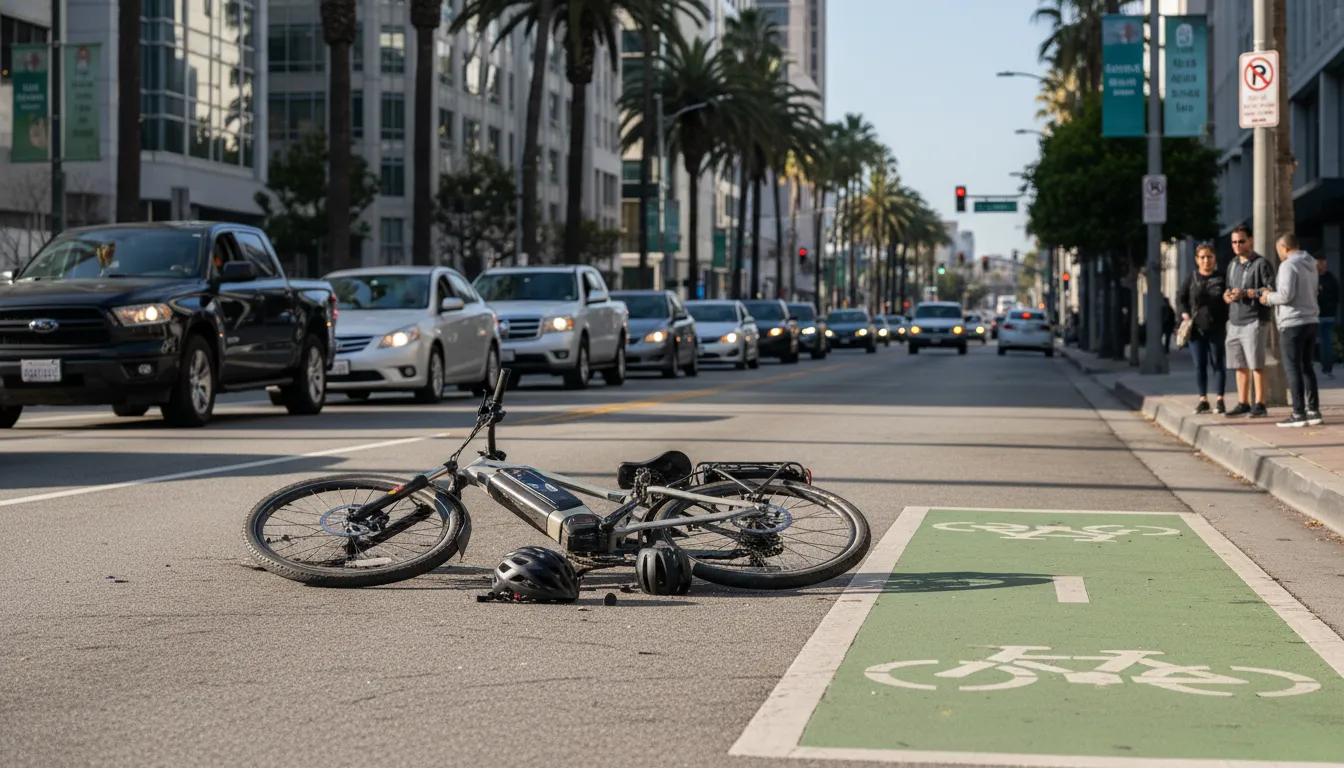
Common e-bike crash scenarios in California injury claims
Cars, doors, and turning traffic
An e-bike rider can be hard to spot when a driver turns across a bike lane. The same danger appears when a car exits a driveway or crosses a parking lot. At intersections, key questions often involve signals, right of way, speed, and each person’s line of sight.
Dooring is another common street hazard. A driver or passenger opens a parked car door into an approaching rider’s path. The rider may hit the door or swerve into traffic. Photos of the door position, parked car, lane marks, and nearby cameras can help show how the crash occurred.
These impacts can cause serious harm, even on a short ride. The CDC reports that bicycling leads sport and recreation activities in emergency visits for traumatic brain injuries. After a vehicle crash, an injured rider may need to find the driver, vehicle owner, and insurer involved.
Delivery routes and road conditions
Delivery traffic adds another layer to a California e-bike claim. A delivery van may stop in a bike lane, turn during a route, or pull away from the curb. A delivery rider may also strike a walker or another cyclist. Depending on the facts, the driver’s work status and company records may matter.
When a crash involves a courier or delivery vehicle, route data and dispatch records may help show what happened. DC Law Group’s guide to legal rights after a delivery e-bike accident explains issues that can arise when work-related driving causes an injury.
Unsafe bike lanes can also lead to a fall or force a rider into a car’s path. Hazards include broken pavement, work barriers, debris, poor lane design, or blocked sight lines. On a shared path, a blind curve, dog leash, or sudden movement can cause contact with a walker or cyclist.
Defects and evidence after a crash
Not every crash begins with another road user. A failing brake, loose wheel, damaged frame, battery issue, or faulty speed control may cause a rider to lose control. Save the e-bike, charger, purchase records, repair history, and product warnings before any repair or disposal.
More than one cause may be involved. A rider could avoid an opening door, hit a damaged bike lane, and then collide with a passing car. An e-bike accident lawyer in California can review the scene, bike, witness accounts, and video to assess each possible party.
Useful evidence often starts close to the scene. If possible, preserve photos of damage, road features, signs, traffic signals, and visible injuries. Collect contact details for witnesses and involved drivers, then keep medical and repair records tied to the crash.
Who may be liable for an electric bicycle crash?
Liability after an e-bike crash is not always limited to one person. A crash can involve a driver’s mistake, unsafe property, work activity, or a failed bicycle part. The key question is which conduct or condition caused the injury.
Drivers, companies, and other riders
A driver may be responsible for turning across a rider’s path, opening a door, speeding, or failing to yield. Another cyclist or e-bike rider may cause harm through an unsafe pass or a traffic violation. Video, witnesses, vehicle damage, and the police report can help explain the impact.
A rideshare or delivery driver can raise added questions. Records may show whether that person was on a trip, making a delivery, or acting outside work duties. In a commercial crash, information about legal rights after a delivery e-bike accident can help a rider understand why business records matter.
The company is not responsible in every crash involving its worker or app. Its possible role depends on facts such as work status, control, policies, and the cause of the collision. Insurance coverage may also differ when a driver is working.
Unsafe roads and property conditions
Some collisions arise from the route itself. A damaged lane, hidden hazard, unsafe work area, blocked view, or poorly managed access point may point to another party. A public entity may be examined for a dangerous public roadway or path. A property owner may be examined for hazards on private land.
These cases often depend on what the condition looked like before repairs or cleanup. Scene photos, nearby camera footage, prior reports, warning signs, and witness names can help preserve that picture. A rider should also note the exact location and direction of travel.
| Liability question | People or business conduct | Road, property, or product condition |
|---|---|---|
| Possible party | Driver, company, or other rider | Public entity, owner, maker, or shop |
| Main issue | Unsafe act caused the crash | Unsafe condition caused the crash |
| Useful records | Video, app logs, report, witnesses | Photos, notices, parts, repair records |
| First concern | Identify people and work status | Preserve the site and e-bike |
Manufacturers and repair shops
The e-bike should not be overlooked when a part may have failed. A manufacturer may be examined if a brake, battery, frame, throttle, or electrical system did not work as intended. A repair shop may be examined if assembly or service left the bicycle unsafe.
The damaged bicycle, its battery, charger, receipts, service records, and photographs may help show what happened. Avoid discarding broken parts or authorizing major repair work before the issue is reviewed. That evidence can matter when several parties dispute the cause.
The injury evidence matters as well. The CDC reports that bicycling leads sport and recreation emergency visits for traumatic brain injuries in the United States. Medical records can document the harm, while crash evidence can show who may be responsible. An e-bike accident lawyer in California can assess each possible party from the specific facts.
What should you do after an e-bike accident in California?
After an e-bike crash, safety comes first. What you do next can also help show what happened, who was involved, and how the crash affected you. Use this checklist if you can safely do so, or ask a family member to help.
Immediate safety and care
An e-bike rider has little protection in a collision. The CDC reports that bicycling leads sport and recreation emergency visits for traumatic brain injuries. Even when injuries seem minor, prompt medical care creates a record and can catch symptoms that emerge after the crash.
-
Get out of danger and seek care. Move away from traffic only if it is safe. Call 911 for serious injuries, head impact, loss of consciousness, heavy bleeding, or pain that limits movement.
-
Report the crash. Ask law enforcement to respond when a vehicle, serious injury, disputed fault, or unsafe road condition is involved. Request the report number and the agency’s contact details.
-
Document the scene. If your condition allows, take photos or video of vehicles, bike damage, debris, lane markings, signs, signals, lighting, and visible injuries. Note the street, direction of travel, time, and weather.
-
Collect names and details. Get each driver’s name, license plate, license information, and insurance details. Ask witnesses for names and contact information before they leave.
-
Preserve the e-bike and gear. Keep the bike, helmet, battery, clothing, lights, and damaged parts in their post-crash state. Do not repair, charge, discard, or allow an inspection without advice.
-
Be careful with statements. Give basic information for a report, but avoid guesses about fault or the full scope of injury. Do not give a recorded statement to an insurer before getting advice.
-
Speak with counsel. Bring photos, medical papers, report details, witness contacts, receipts, and any insurer letters. An e-bike accident lawyer in California can review the parties and evidence tied to the crash.
Evidence to save after the scene
Start a simple file after medical needs are addressed. Save discharge papers, visit summaries, prescriptions, work notes, damaged property photos, towing records, and emails from insurance companies. Keep copies of any police report request and all messages about the e-bike.
If an app tracked the trip, save the route and ride history before data is lost. Preserve purchase records, manuals, battery details, maintenance records, and any recall notice. These items may matter if the crash involved a bike part, battery issue, or service work.
Conversations after a crash
Insurance calls can arrive while you are still treating injuries. You can provide contact details without agreeing to a recorded interview or signing a release right away. Before sharing records or accepting terms, consider scheduling a free consultation to discuss your next steps.
Claim options for riders, pedestrians, and families
Claims against drivers and other at-fault parties
An injured e-bike rider may have a claim against a driver who caused the crash. Examples include unsafe turns, dooring, speeding, or failing to yield. A pedestrian struck by an e-bike may also bring a claim against a careless rider. The facts, insurance coverage, and proof of harm shape each claim.
A claim may seek payment for medical care, missed work, damaged property, and the human toll of an injury. When a car caused the crash, its liability insurer is often a starting point. If the driver lacks enough coverage, uninsured or underinsured motorist coverage may apply under an injured person’s own policy. Coverage terms must be reviewed carefully.
More than one party may be involved. A delivery company may be part of a case if its worker caused a crash during a delivery. Our guide to legal rights after a delivery e-bike accident explains why the work relationship and records matter.
Defective bikes and unsafe streets
Some crashes begin with a failed brake, battery problem, faulty tire, or broken frame. In that setting, a product claim may involve a maker, seller, repair shop, or rental provider. Keep the e-bike, battery, charger, receipts, and service records. Do not repair or discard key parts before they can be checked.
Street design and maintenance can matter too. A rider may be hurt by a dangerous pavement defect, missing warning, blocked bike route, or unsafe public work zone. A claim against a city or another public entity can involve special notice rules and shorter timing requirements. Prompt review helps preserve photos, reports, and possible public claim rights.
Serious bicycle injuries can affect a household for years. The CDC reports that bicycling leads sport and recreation-related emergency department visits for traumatic brain injuries in the United States. Families dealing with brain injury, spinal harm, or long hospital stays should save care plans and work-loss records.
Fatal crashes and pedestrian injuries
When an e-bike crash results in death, close family members may have a wrongful death claim. A separate survival claim may address losses the injured person had before death. Possible responsible parties can include a driver, careless rider, product company, employer, or public entity. The available claims depend on the evidence and family relationship.
Pedestrians should seek care and report the event, even if the rider leaves or has no insurance information. Video, witness names, app records, and bike details may help show who caused the impact. A pedestrian can speak with an e-bike accident lawyer in California about possible insurance and injury claims.
For catastrophic injuries, a family member may need to gather records while the injured person is unable to do so. Save hospital documents, rehabilitation plans, mobility needs, income records, and all insurer letters. These records help show current harm and future care needs without forcing the family to rely on memory later.
When a crash involves higher speeds or severe road rash, some evidence issues overlap with a motorcycle accident lawyer California case, including helmet use, roadway hazards, and driver lookout.
What evidence can strengthen an e-bike injury case?
Records that show what happened
A strong claim starts with proof from the scene. Ask for the crash report number, then keep a copy when the report is ready. Save photos of the roadway, bike lane, signs, debris, vehicle damage, and injuries. Nearby doorbell, business, traffic, or helmet camera video may show the impact before it is erased.
Witness names and contact details can help explain signals, speed, right of way, or a driver’s actions. Keep all texts and insurance correspondence, but avoid guesses about fault in recorded statements. An e-bike accident lawyer in California can assess which records may support liability.
Proof of injuries and related loss
Medical records link the crash to the injuries being treated. Save emergency room papers, imaging results, visit summaries, therapy notes, prescriptions, and discharge instructions. Keep a simple log of symptoms and limits on work or daily tasks. These items can show the course of recovery and the effect of an injury.
Do not discard a helmet, torn clothing, damaged phone, or the e-bike itself. Store each item in its crash condition, and photograph it from several angles. A damaged helmet may matter in a head injury claim. The CDC reports that bicycling leads sport and recreation-related emergency visits for traumatic brain injuries.
- Keep billing records, receipts, and wage or schedule records tied to missed work.
- Download photographs and video in their original format, with date information intact.
- Write down each provider, appointment date, and work restriction while details are fresh.
E-bike, app, and business records
E-bike evidence can point to more than one responsible party. Preserve the make, model, serial number, battery, charger, purchase receipt, manual, warning labels, and repair history. Do not repair or charge a damaged bike before it can be inspected. Product details can help assess a brake, battery, throttle, or assembly issue.
Electronic records can change or disappear. Take screenshots of app trip history, route details, battery notices, and ride settings. Preserve any account export, if available. It may show timing, use, or reported trouble without changing the bike.
If a delivery rider or app-based trip was involved, save order confirmations, delivery times, route screens, account messages, and receipts. Those records may show the trip purpose and point to a business with key information. This can matter when reviewing legal rights after a delivery e-bike accident.
Also preserve maintenance invoices, recall notices, rental agreements, and insurer letters. Each record answers a different question: who controlled the bike, what failed, what treatment followed, or which losses occurred. Keeping the original evidence helps counsel assess liability and damages without relying only on memory.
How long do you have to bring an e-bike accident claim?
Why timing depends on the claim
After an e-bike crash, it is wise to speak with counsel as soon as you can. California injury claims have filing rules. The right deadline depends on the facts and the party involved. Waiting may also make it harder to find video, damaged equipment, or witnesses.
The legal setting starts with what was involved in the crash. California law defines an electric bicycle as a bicycle with working pedals and a motor that does not exceed 750 watts. The California Vehicle Code definition of an electric bicycle helps show whether the crash concerned an e-bike or another powered device.
Many injury cases are reviewed under California’s usual rule for personal injury claims. Yet the correct filing period should be checked for your case. The date of injury, the identity of each responsible party, and later discovered harm may affect legal analysis.
Claims that need an early deadline check
A rider may have a claim against a driver, a business, or a maker of a failed part. In some crashes, a dangerous road surface, missing warning, signal issue, or public property condition may matter. Counsel should check each possible party early, before a notice rule or deadline is missed.
Do not assume that one filing period covers every possible claim. A claim involving a city, county, transit agency, or other public body needs prompt review. Special notice steps may apply before a lawsuit can move forward. Those steps may come earlier than the usual injury claim process.
Online deadline summaries cannot replace a review of the crash facts. An e-bike accident lawyer in California can examine who controlled the location and which parties may need notice.
Insurance calls before the full harm is clear
An insurance adjuster may contact you soon after the crash. You can give basic contact details. Use care before giving a recorded statement or signing a release. Pain, concussion signs, or equipment damage may not be clear during that first call.
Keep the e-bike, helmet, clothing, photographs, medical papers, repair records, and all insurance messages. Write down the crash location, date, witnesses, and any nearby cameras. These materials can help counsel track evidence while checking the correct claim deadlines.
Prompt advice matters when a serious injury or public roadway condition may be part of the claim. You can schedule a free consultation to discuss the crash, insurance contact, and the deadline review your facts require.
Frequently Asked Questions
Can I sue if I am injured in an e-bike accident?
Yes. An injured e-bike rider may pursue a claim when another party’s careless conduct caused the crash and injuries. Depending on the facts, responsible parties may include a driver, delivery company, bike manufacturer, property owner, or public entity responsible for a dangerous lane. Photographs, witness information, medical records, and the e-bike itself can help identify each claim.
Pedestrians injured by an e-bike can also review DC Law Group’s guidance for a pedestrian accident lawyer California claim, especially when a shared path or crosswalk is involved.
What damages can I recover in an e-bike accident claim?
A California e-bike injury claim may include medical expenses, lost income, damaged bicycle or gear, and compensation for physical pain and disrupted daily life. Available damages depend on proof of fault, injury records, recovery needs, and insurance coverage. If injuries may require future treatment or affect work, records from treating providers and employers become especially important.
Can I ride an e-bike on California roads?
California treats qualifying electric bicycles as bicycles, but riding locations can depend on the e-bike class and local rules. Under California Vehicle Code section 312.5, an electric bicycle has operable pedals and a motor not exceeding 750 watts. Class 1 and Class 2 assistance stops at 20 mph, while Class 3 pedal assistance stops at 28 mph.
What are the common causes of e-bike accidents in California?
California e-bike crashes often involve drivers who turn, merge, or open doors without seeing a rider. Other cases involve delivery vehicles, broken pavement, unsafe bike-lane design, shared-path conflicts, or failures in brakes, batteries, or other bike parts. Because several parties may contribute to one collision, preserve the bicycle, scene photographs, purchase records, and any available video.
Ready to protect your rights after an e-bike crash?
An e-bike collision can disrupt medical care, transportation, and work while bills, insurance questions, and daily obligations keep moving forward. Waiting may make photos, records, and witness details harder to organize, while insurers or other parties may seek answers from you. Starting now creates time to explain what happened, review who may be responsible, and choose informed next steps for your injury claim.
You do not have to evaluate a driver, unsafe lane, defective e-bike, dooring incident, or shared-path injury without legal guidance. Ready to protect your rights? Schedule a free consultation with DC Law Group to discuss your possible California e-bike accident claim and practical next steps with an attorney.