


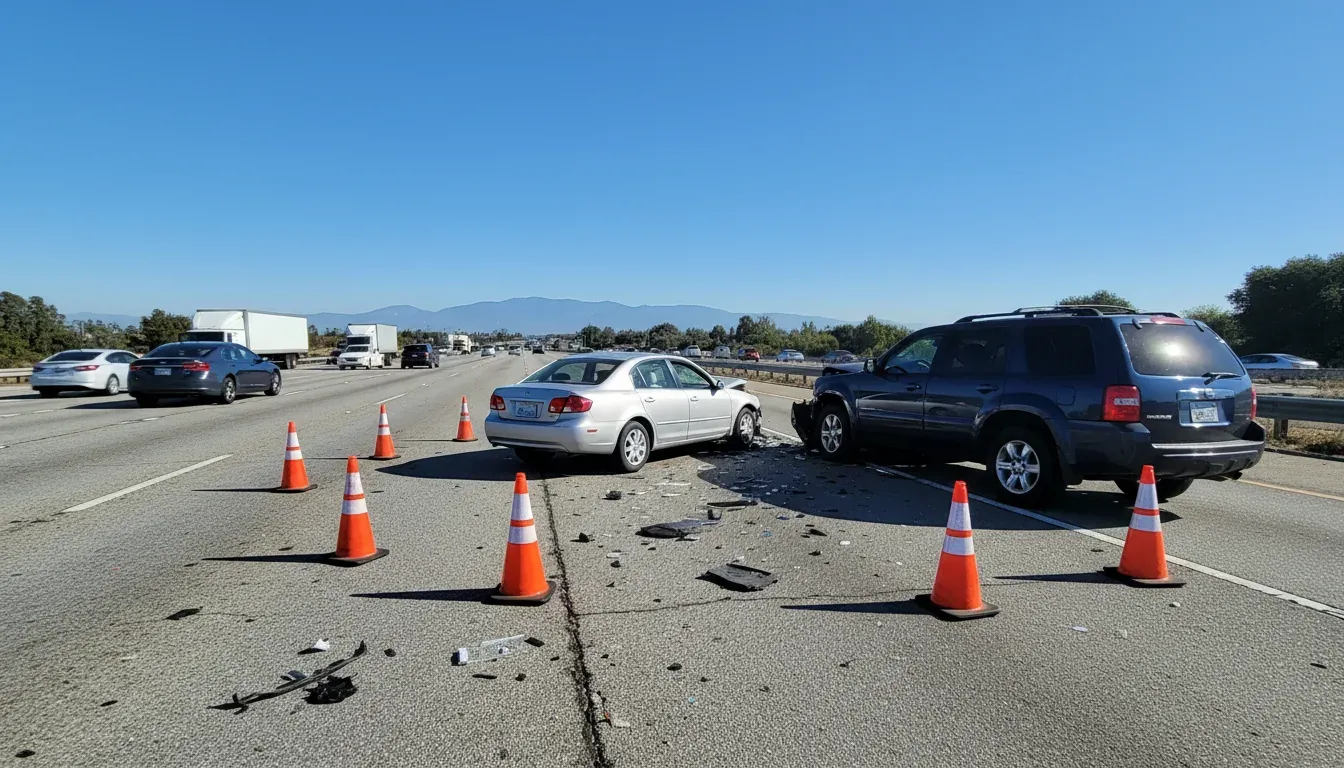

Insurance Denied Car Accident Claim in California: What to Do Next
Getting a denial letter after a crash can feel like the insurance company is closing the case before you have had a real chance to recover. If your insurance denied car accident claim in California, the denial is not always the final word. Insurers make mistakes, adjusters overlook evidence, and some companies reject valid claims hoping injured people will give up.
Need help after an insurance denial? Contact DC Law Group for a free consultation. No fees unless we win for you.
This guide explains why car accident claims get denied, what your denial letter should include, how to organize an appeal, and when a California personal injury lawyer can step in. The goal is simple: help you protect your rights, preserve key evidence, and avoid deadlines that could affect your claim.
Why Insurance Companies Deny Car Accident Claims
Insurance companies deny car accident claims for many reasons. Some denials are based on real coverage issues. Others are based on incomplete information, disputed facts, or an adjuster’s narrow view of the evidence. The reason matters because your next move should directly answer the insurer’s stated basis for denial.
Common denial reasons include:
- Disputed liability: The insurer claims its driver was not at fault, or argues you were fully or mostly responsible for the crash.
- Policy exclusions: The company points to policy language that it says excludes coverage for the accident.
- Coverage lapse: The insurer says the policy was canceled, expired, or not active on the crash date.
- Delayed reporting: The company argues that you waited too long to report the accident or injury.
- Insufficient documentation: The adjuster says there is not enough medical proof, repair documentation, witness support, or wage loss evidence.
- Pre-existing condition arguments: The insurer claims your pain or limitations existed before the crash.
- Low impact defense: The insurer argues that vehicle damage was not severe enough to cause the injuries claimed.
- Recorded statement issues: The adjuster relies on something you said early in the process, often before your symptoms were fully known.
A denial may sound official, but it is still just the insurance company’s position. Your job, ideally with legal guidance, is to test that position against the facts, the policy, California claims regulations, and the evidence available.
What Should a California Denial Letter Include?
A California insurance denial letter should explain the insurer’s reasons in writing. Under 10 California Code of Regulations section 2695.7, insurers must meet standards for prompt, fair, and equitable settlements. For first-party claims, the regulation says a written denial should list the factual and legal bases for the denial that are within the insurer’s knowledge. When the denial relies on a policy provision, condition, exclusion, statute, or law, the letter should reference it and explain how it applies to the claim.
That matters because a vague denial can be challenged. A letter that simply says “coverage denied” or “liability disputed” without meaningful detail may not give you enough information to respond. Keep the letter, the envelope, emails, claim numbers, adjuster names, and every document the insurer sent. Those details can become important later.
What to Do After an Insurance Denial
After a car accident claim denial, take organized steps instead of reacting emotionally. The fastest path is not always the loudest complaint. It is a careful response that addresses the denial point by point.
- Read the denial letter carefully: Identify every reason given. Separate coverage issues from liability issues, injury disputes, documentation gaps, and deadline concerns.
- Request clarification in writing: If the letter is vague, ask the adjuster to identify the exact policy language, facts, photos, reports, or statements used to deny the claim.
- Gather missing evidence: Collect the police report, photos, videos, medical records, bills, repair estimates, witness information, and proof of lost wages.
- Do not give a new recorded statement without advice: A second statement can create more problems if you are hurt, medicated, stressed, or unsure about details.
- Build a written response: Answer each denial reason with evidence. Keep the tone professional and factual.
- Track deadlines: Insurance appeal deadlines, lawsuit deadlines, and government claim deadlines can be different. Do not assume negotiations pause legal deadlines.
- Speak with a lawyer before accepting a small offer: A denial can sometimes turn into a low settlement offer. Make sure the amount accounts for medical bills, future care, lost income, pain, and long-term impact.
For a broader view of what legal representation involves after a crash, see DC Law Group’s guide to the car accident lawyer process.
First-Party Claim vs. Third-Party Claim: Why It Matters
One of the most important questions is whose insurance denied the claim. A first-party claim is usually made with your own insurer. Examples include uninsured motorist coverage, underinsured motorist coverage, medical payments coverage, collision coverage, or comprehensive coverage. A third-party claim is usually made against the at-fault driver’s insurance company.
| Issue | First-Party Claim | Third-Party Claim |
|---|---|---|
| Who you are dealing with | Your own insurance company | The other driver’s insurance company |
| Common examples | UM/UIM, Med Pay, collision coverage | Bodily injury and property damage claim against at-fault driver |
| Bad faith issues | May apply if your insurer unreasonably denies benefits owed under your policy | Usually handled by proving liability and damages against the at-fault driver |
| Main response | Policy review, appeal, demand, possible bad faith analysis | Evidence package, liability proof, injury proof, possible lawsuit against the driver |
This distinction changes the strategy. If your own insurer denied benefits you purchased, the focus may include policy interpretation and whether the insurer acted reasonably. If the other driver’s insurer denied liability, the focus is often proving fault and damages through evidence, then pursuing the at-fault driver if the insurer refuses to resolve the claim fairly.
If the denial involves an uninsured or underinsured driver, review DC Law Group’s guide to uninsured motorist claims in California or schedule a consultation to understand your options.
How to Challenge a Denied Car Accident Claim
To challenge a denied car accident claim, create a clean record. Assume every email, letter, photo, and medical note may need to be reviewed by another adjuster, a supervisor, a mediator, or a court later.
1. Ask for the complete basis of denial
Ask the insurer to confirm the denial reason in writing. If the company references a policy exclusion, request the exact policy language. If it claims you were at fault, ask what facts support that conclusion. If it disputes your injuries, ask what records, reviews, or expert opinions it relied on.
2. Organize your evidence by issue
Do not send a random pile of documents. Match evidence to the denial. For a liability dispute, use police reports, scene photos, dashcam footage, witness statements, vehicle damage photos, traffic signal evidence, and crash diagrams. For an injury dispute, use emergency records, follow-up treatment notes, diagnostic imaging, physical therapy records, work restrictions, and pain journals.
3. Write a focused appeal letter
Your appeal should be direct. State the claim number, accident date, denial date, and the reasons you disagree. Then respond to each denial point with facts. Attach supporting documents and keep copies of everything. Avoid exaggeration. Credibility is one of the strongest tools you have.
4. Consider a Department of Insurance complaint
If you believe an insurer is using unfair claims practices, you can contact the California Department of Insurance. A complaint is not the same as a lawsuit, and it may not force payment of your claim. However, it can create pressure for the insurer to explain its position and comply with California claims handling rules.
5. Talk to a personal injury lawyer before the statute of limitations runs
Insurance discussions do not always protect your legal rights. In many California personal injury cases, the general deadline to file a lawsuit is two years from the injury date, but shorter deadlines can apply in some cases, including claims involving public entities. Speak with a lawyer early so you do not lose leverage while waiting for an insurer to reconsider.
When Is an Insurance Denial Bad Faith?
Insurance bad faith can occur when an insurer unreasonably withholds benefits owed under a policy. Not every denial is bad faith. Insurers can dispute claims when there is a legitimate factual or coverage issue. The problem begins when the company ignores evidence, misrepresents policy language, delays without a valid reason, or denies a claim without a reasonable investigation.
Potential bad faith warning signs include:
- The insurer denies your claim without explaining the facts or policy language it relied on.
- The adjuster refuses to consider medical records, photos, witness statements, or police reports.
- The company repeatedly asks for documents you already provided.
- The insurer delays decisions without giving a clear reason.
- The adjuster misstates what your policy covers.
- The company offers far less than the documented losses without explaining the calculation.
Bad faith analysis is fact-specific. It also depends on the type of claim and whether you are dealing with your own insurer or someone else’s insurer. If you suspect bad faith, do not argue only by phone. Put key requests in writing, preserve all communications, and get legal advice before signing anything.
Evidence That Can Help Reverse a Denial
A strong evidence package can change the direction of a claim. Insurers often deny claims when they believe the file is weak. Strengthening the file can make the denial harder to defend.
Helpful evidence may include:
- Police report: Confirms basic accident facts, parties, location, citations, and sometimes fault indicators.
- Photos and videos: Show vehicle positions, impact points, skid marks, traffic controls, road conditions, injuries, and property damage.
- Medical records: Connect injuries to the crash and show diagnosis, treatment, restrictions, and prognosis.
- Witness statements: Support your version when liability is disputed.
- Repair estimates: Help prove impact severity and property loss.
- Employment records: Document missed work, reduced hours, lost opportunities, and wage loss.
- Expert analysis: Accident reconstruction, medical opinions, or vocational evidence may help in serious or disputed cases.
For property damage issues specifically, DC Law Group also explains how a lawyer for car accident property damage can help when repair costs, total loss disputes, or vehicle replacement problems complicate the claim.
Should You Accept a Settlement After a Denial?
Be careful if the insurer denies your claim and later offers a quick settlement. That offer may not reflect the full value of your case. Once you sign a release, you usually cannot come back later for more money, even if your injuries worsen or additional treatment becomes necessary.
Before accepting, ask these questions:
- Does the offer cover all current medical bills?
- Does it account for future treatment or follow-up care?
- Does it include lost wages and reduced earning ability?
- Does it include pain, suffering, and daily life disruption?
- Are there health insurance liens, medical liens, or reimbursement claims?
- Are you being asked to release parties beyond the insurer or at-fault driver?
Before you sign a release, book an appointment with DC Law Group. A free consultation can help you understand whether the denial or offer is fair.
How DC Law Group Helps Fight Insurance Denials
DC Law Group helps California accident victims deal with insurers that deny, delay, or undervalue claims. The firm handles car accidents, truck accidents, motorcycle crashes, rideshare accidents, pedestrian injuries, premises liability cases, and catastrophic injury claims. That experience matters because insurance denials often combine several issues at once: fault, coverage, medical causation, damages, liens, and timing.
When DC Law Group reviews a denial, the team can evaluate the denial letter, identify missing evidence, communicate with the insurance company, calculate damages, and prepare the claim for negotiation or litigation. The firm’s contingency fee model means there are no fees unless they win for you. DC Law Group also emphasizes practical support for clients, including medical care coordination, vehicle repair help, transportation assistance, and 24-hour cash advances when available.
Managing Attorney David Cohan brings direct attorney involvement to personal injury matters, and the firm serves accident victims throughout California. If you want to understand whether legal representation makes sense, DC Law Group’s article on whether it is worth getting an attorney for a car accident may help you compare the risks and benefits.
Frequently Asked Questions
Can an insurance company deny my car accident claim in California?
Yes, an insurance company can deny a car accident claim in California, but it should have a factual or legal basis for doing so. The denial should be explained in writing. If the denial is vague, unsupported, or ignores important evidence, you may be able to challenge it through an appeal, a demand letter, a Department of Insurance complaint, or legal action.
What is the first thing I should do after a denial?
The first thing to do after a denial is read the letter carefully and preserve every related document. Identify the exact reasons for denial, then gather evidence that responds to each reason. If the denial involves serious injuries, disputed fault, or confusing policy language, speak with a California personal injury lawyer before making new statements or signing anything.
Can I sue if the other driver’s insurance denies my claim?
You may be able to sue the at-fault driver if the other driver’s insurance denies your claim. The insurer is not always the direct defendant in a third-party injury case, but a lawsuit against the negligent driver can force the insurer to defend the claim and evaluate the evidence more seriously. Deadlines apply, so do not wait too long.
Does a denial mean my case is over?
No, a denial does not automatically mean your case is over. Many denials can be challenged with additional evidence, a clearer liability presentation, medical documentation, or legal pressure. The key is understanding why the claim was denied and responding with a strategy that addresses the insurer’s stated concerns.
Talk to DC Law Group About a Denied Car Accident Claim
An insurance denial can be frustrating, but it should not push you into giving up. The denial letter is a starting point for your response, not necessarily the end of your claim. With the right evidence and legal guidance, you may still be able to pursue compensation for medical bills, lost income, property damage, pain, and the long-term impact of the crash.
If your insurance denied a car accident claim in California, contact DC Law Group today for a free consultation. Hablamos Espanol. No fees unless we win for you.
Injured in an accident? Learn how our California personal injury lawyers can help you get maximum compensation. Free consultation — no fees unless we win.