


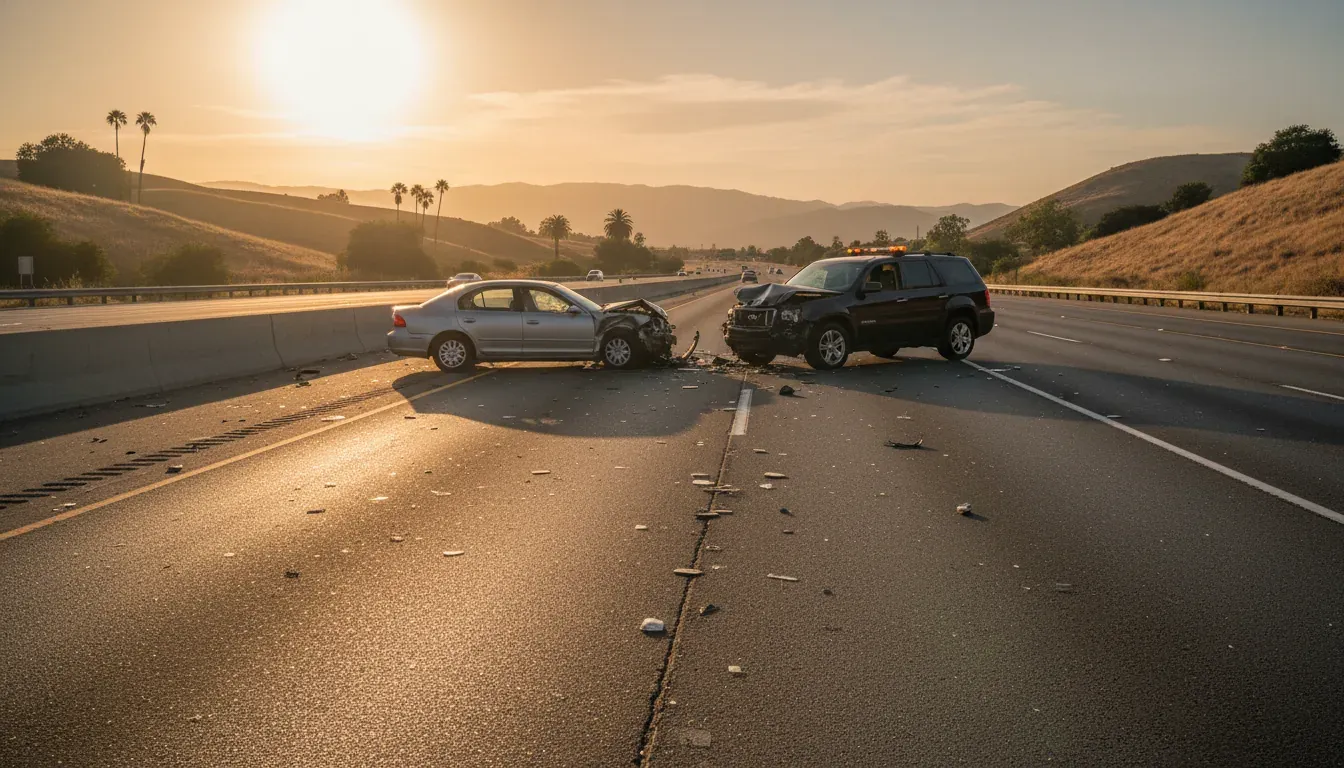
Distracted Driving Accidents in California: Laws, Statistics, and Your Legal Options
Every year in California, thousands of people are injured or killed because a driver chose to look at a phone, eat, or take their attention off the road for just a few seconds. If you were hurt in a crash caused by a distracted driver, you have the right to seek full compensation for your injuries, lost income, and pain and suffering.
Contact DC Law Group for a free consultation. Call 310-571-8860 or reach out online today. We charge no fees unless we win your case.
What Is Distracted Driving Under California Law?
Distracted driving refers to any activity that diverts a driver’s attention from the road. California law identifies three primary categories of distraction:
- Visual distractions — taking your eyes off the road (reading a text, checking a GPS screen)
- Manual distractions — taking your hands off the wheel (eating, reaching for an object, holding a phone)
- Cognitive distractions — taking your mind off driving (daydreaming, intense conversations)
Texting while driving combines all three types simultaneously, making it among the most dangerous behaviors on California roads.
California Vehicle Code 23123 and 23123.5
California has strict laws targeting phone use behind the wheel:
- Vehicle Code 23123 prohibits any driver from holding and using a wireless telephone while driving. Using a phone in hands-free mode (mounted and operated by a single swipe or tap) is permitted.
- Vehicle Code 23123.5 prohibits writing, sending, or reading text-based communication on a handheld device while driving. This covers texts, emails, social media posts, and similar messages.
- Drivers under 18 are fully prohibited from using any phone while driving, including hands-free devices.
A first violation carries a $162 base fine. A second violation within 36 months increases the penalty and adds a point to the driver’s record. Repeat violations can lead to higher insurance premiums and license consequences.
Violating these laws does not only expose a driver to a traffic citation. When that violation causes a crash and someone gets hurt, it becomes evidence of negligence in a personal injury claim.
How Common Are Distracted Driving Crashes in California?
Distracted driving is not a rare or occasional problem. According to data from the California Highway Patrol’s Statewide Integrated Traffic Records System, between 2020 and 2024, more than 60,000 crashes in California involved driver inattention. Those crashes resulted in the deaths of more than 350 people and injuries to more than 43,000 others.
In April 2025, the CHP launched a Distracted Driving Awareness Month enforcement campaign. During a single two-day Maximum Enforcement Period, officers statewide issued nearly 14,000 citations. More than 3,200 of those were for hands-free driving violations alone.
These numbers reflect one clear reality: drivers are still making the choice to look down at their phones while operating vehicles at highway speeds, and real people are paying the price with their health, their finances, and sometimes their lives.
Common Types of Distracted Driving
Phone use gets most of the attention, but it is not the only form of distraction that causes serious accidents on California roads.
Texting and Smartphone Use
Reading or sending a text at 55 miles per hour means traveling the length of a football field without looking at the road. Even a two-second glance at a phone dramatically increases crash risk. Smartphone-related distractions include texting, scrolling social media, checking navigation apps, watching videos, and taking photos.
Eating and Drinking Behind the Wheel
Drive-through meals and coffee cups are a common source of distraction. Unwrapping food, managing spills, or reaching for a drink takes both eyes and hands away from driving, often at the worst possible moment.
GPS and In-Vehicle Technology
Navigation systems, touchscreen controls, and in-dash entertainment systems require visual and manual attention. Interacting with these systems while in motion creates real crash risk, even if drivers view it as less risky than phone use.
Passengers and Pets
Conversations with passengers, children requiring attention, and unrestrained pets in the vehicle can all pull a driver’s focus away from traffic conditions, especially in sudden or complex driving situations.
Grooming and Other Activities
Applying makeup, shaving, adjusting clothing, or even daydreaming during a long commute all qualify as cognitive or manual distractions that reduce a driver’s ability to respond to hazards.
If a distracted driver injured you or a family member, DC Law Group can help you pursue the compensation you deserve. Contact us for a free case evaluation — no fees unless we win.
Injuries Caused by Distracted Driving Accidents
Crashes involving distracted drivers frequently result in severe injuries because the inattentive driver fails to brake, swerve, or slow down before impact. Common injuries include:
- Traumatic brain injuries (TBI) — concussions, contusions, and diffuse axonal injuries
- Spinal cord injuries and paralysis
- Broken bones — arms, legs, ribs, pelvis, and facial fractures
- Soft tissue injuries — whiplash, torn ligaments, and muscle tears
- Internal organ damage and internal bleeding
- Facial lacerations and scarring
- Wrongful death in the most serious cases
Many distracted driving injury victims require emergency surgery, extended hospitalization, months of physical therapy, and ongoing medical care. The financial impact — lost wages, medical bills, home modification costs, and reduced earning capacity — can follow a victim for years.
For severe and lasting injuries, see our overview of catastrophic personal injury claims in California.
How to Prove a Driver Was Distracted
In a California personal injury case, the injured party must show that the other driver was negligent and that the negligence caused the crash. Proving distraction requires gathering evidence quickly, because some of it disappears fast.
Cell Phone Records
Phone carriers maintain records of texts, calls, data usage, and app activity. If a driver was texting at the time of the crash, those records can confirm the distraction. Obtaining them requires a formal records request or legal discovery in litigation.
Video Surveillance and Dash Camera Footage
Nearby traffic cameras, intersection cameras, business security systems, and dash cameras mounted in other vehicles may have captured the crash or the moments leading up to it. This footage is often overwritten within days, making early preservation critical.
Witness Statements
Bystanders who saw the driver looking down, eating, or otherwise distracted before the crash can provide powerful testimony. Police officers may also note signs of distraction in their crash report.
Electronic Data and Vehicle Event Recorders
Modern vehicles record speed, braking, steering input, and other data in the seconds before a crash. Combined with reconstructed impact data, this information can help establish that the driver failed to react in time because they were not paying attention.
Social Media and App Activity
Location data, timestamped posts, and app activity on the driver’s phone can help connect their behavior to the moment of the crash.
Experienced legal representation matters enormously in distracted driving cases because collecting and preserving this evidence requires acting fast. DC Law Group begins building your case from the first call, helping ensure that critical proof does not disappear. To understand what your legal process may look like, read our guide on the California car accident lawyer process.
Compensation Available in a Distracted Driving Accident Claim
California law allows injury victims to recover both economic and non-economic damages from the at-fault driver and their insurance carrier.
Economic Damages
- Medical expenses — emergency care, surgery, hospitalization, physical therapy, and future medical costs
- Lost wages for time missed from work during recovery
- Reduced earning capacity if the injury affects long-term ability to work
- Property damage — vehicle repair or replacement
- Out-of-pocket costs related to the injury
Non-Economic Damages
- Pain and suffering
- Emotional distress and anxiety
- Loss of enjoyment of life
- Loss of consortium for spouses and family members
- Permanent scarring or disfigurement
Punitive Damages
In cases involving extreme recklessness, such as a driver who was texting at high speed in a school zone or driving while under the influence, California courts may award punitive damages on top of compensatory damages. These awards are designed to punish especially dangerous conduct and deter similar behavior.
Ready to find out what your distracted driving case may be worth? Contact DC Law Group for a free, confidential consultation. Call 310-571-8860 — no fees unless we win.
What to Do After a Distracted Driving Accident in California
What you do in the hours and days after a crash can significantly affect the value and outcome of your personal injury claim.
- Call 911 and get medical attention — Always contact law enforcement and seek medical treatment immediately, even if you feel fine. Some injuries, including concussions and internal bleeding, are not immediately obvious. A medical record tied to the crash date is essential for your claim.
- Document the scene — If you are able to do so safely, photograph the vehicles, road conditions, visible injuries, and any nearby cameras or witnesses.
- Note the driver’s behavior — If you saw the driver looking at a phone, eating, or otherwise distracted before the crash, write it down as soon as possible and share it with police and your attorney.
- Do not discuss fault — Avoid making statements about what happened to the other driver, their insurance company, or on social media. Anything you say can be used against you.
- Contact a California distracted driving accident lawyer — The sooner you retain legal representation, the faster your attorney can act to preserve video footage, subpoena phone records, and protect your rights before evidence disappears.
California’s statute of limitations for personal injury claims is generally two years from the date of the accident. Waiting too long can permanently bar your right to recover. If the at-fault driver was a government employee or the crash involved a public entity, the deadline may be as short as six months.
How DC Law Group Helps Distracted Driving Accident Victims
DC Law Group is a California personal injury law firm led by Managing Attorney David Cohan, Esq. The firm works on a pure contingency fee basis — you pay nothing upfront and owe no attorney fees unless we recover compensation for you.
From the first consultation, our team works to:
- Investigate the crash and identify all sources of evidence
- Subpoena phone records and obtain surveillance footage before it is deleted
- Coordinate your medical care so you can focus on recovery
- Negotiate aggressively with the insurance carrier for a fair settlement
- Take the case to trial if the insurer refuses to offer full and fair compensation
David Cohan has been recognized as a Super Lawyers Rising Star for 2025-2026, a designation given to fewer than 2.5 percent of California attorneys. He handles cases personally — not delegated to junior associates or case managers — so clients receive direct attention from an experienced lawyer throughout the process.
We also provide clients with practical support during their case. For accident victims facing financial pressure while recovering, we offer a 24-hour cash advance program to help bridge the gap between your accident and your settlement. We coordinate medical appointments, assist with vehicle repair or replacement, and come to you if you cannot travel to our office.
Our office serves accident victims throughout California, including the Inland Empire, Sacramento, Fresno, the San Fernando Valley, and greater Los Angeles. To learn more about what we handle, visit our personal injury and accident services page.
Frequently Asked Questions About Distracted Driving Accidents in California
Can I sue a driver who was texting when they hit me?
Yes. If a driver was violating California Vehicle Code 23123 or 23123.5 at the time of the crash, that violation is evidence of negligence. You may pursue a personal injury claim against the at-fault driver and their insurance carrier for your medical expenses, lost wages, pain and suffering, and other damages.
How do I prove the other driver was on their phone?
Phone records, surveillance footage, witness statements, dash camera video, and vehicle data can all help establish that a driver was distracted. An attorney can issue preservation letters and pursue discovery to obtain these records before they are lost.
What if the distracted driver’s insurance denies my claim?
Insurance companies routinely deny or undervalue legitimate claims. If your claim is denied or the offer is insufficient, an experienced personal injury attorney can negotiate on your behalf or file a lawsuit. DC Law Group handles these negotiations every day and is prepared to take cases to trial when necessary.
Does it matter if I was partly at fault for the crash?
California follows a pure comparative fault rule. Even if you were partially at fault for the accident, you may still recover damages. Your compensation is reduced by your percentage of fault. For example, if you were 20 percent at fault and your damages total $100,000, you could still recover $80,000.
How long do I have to file a distracted driving lawsuit in California?
The general statute of limitations for personal injury claims in California is two years from the date of the accident under California Code of Civil Procedure section 335.1. Important exceptions apply for crashes involving government vehicles or public employees — those claims may require filing a government tort claim within six months. Contact an attorney promptly to protect your rights.
What does DC Law Group charge for a distracted driving case?
Nothing upfront. DC Law Group works entirely on a contingency fee basis. You pay no attorney fees unless we win your case. There are no retainers, no consultation fees, and no out-of-pocket legal costs while your case is pending.